The Express
In 1971 New York City promised to rebuild Yankee Stadium “whatever the cost” to keep the team from following the NY Football Giants to New Jersey or the baseball Dodgers and Giants to California.
The new owners paid less than CBS had nine years earlier.
By the time the stadium reopened, the city had nearly gone bankrupt, and the mayor didn’t attend the opening ceremony.
Bring your own tools
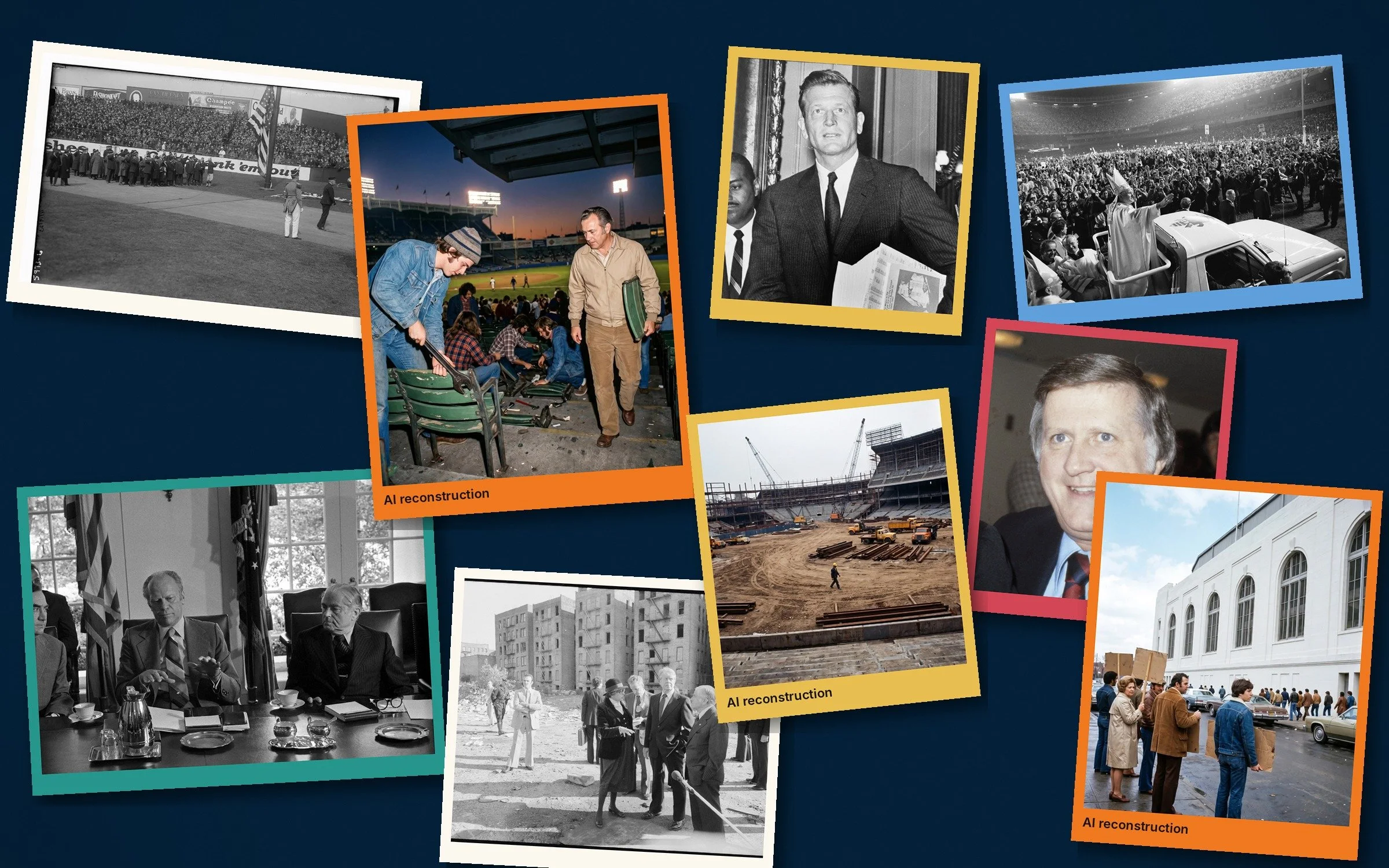
On Sunday, September 30, 1973, the New York Yankees played their final game in the stadium Babe Ruth had christened fifty years earlier. They led the Detroit Tigers 4–2 after seven innings, gave up six runs in the eighth, and lost 8–5. About 32,000 people came, roughly half capacity.
Many of those attending came prepared. When the last out was made, fans pried their seats out of the concrete with tools they had carried in, or ran onto the field for handfuls of dirt and sod. Elston Howard, the Yankees’ first-base coach and the team’s first Black player, found himself wrestling a fan for first base.
The next morning, New York City Mayor John V. Lindsay held a short ceremony amid the wreckage. He gave first base to Eleanor Gehrig, widow of Lou Gehrig, and home plate to Claire Ruth, widow of Babe Ruth. Then the demolition crews went to work.
The fans who carried home their seats thought they were taking a piece of the Yankees. In fact they were taking a piece of the City of New York. The city had owned the ballpark for more than a year, and it had promised to rebuild it, whatever that cost.
How America’s most famous ballpark became city property, and who came out ahead, is a story about a worried mayor, a bargain-hunting shipping executive, and a city about to run out of money.
The football Giants were leaving. Were the Yankees next?
New York had lost baseball teams before. After the 1957 season the Brooklyn Dodgers and the baseball Giants of the Polo Grounds left for California, and the city never forgot it.
By 1970 the Yankees looked like a candidate to follow. CBS had bought the team in 1964, just as the winning stopped. In 1966 the Yankees finished last. Their stadium, nearly fifty years old, was worn and hard to reach by car. And the team didn’t even own it.
A 1953 tax arrangement had split the property: by the 1960s the building belonged to Rice University in Houston, and the ground beneath it to the Knights of Columbus, a Catholic fraternal order. CBS owned the team; a Texas university owned the ballpark.
In August 1970, at the annual Mayor’s Trophy Game against the Mets, Mayor Lindsay sat beside Michael Burke, the president CBS had installed to run the Yankees. “Look, we’ve really got to do something for the Yankees,” Lindsay told him.
Burke answered with a wish list. First choice: a new domed stadium. Second: a new open-air one. Third, failing those, a major renovation of the old park, with parking his suburban fans could reach easily. Crime in the Bronx was rising, and Burke told City Hall that fans needed to be able to park within sight of the stadium.
Then, on August 26, 1971, the city got the jolt it feared. The NY Football Giants, tenants at Yankee Stadium since 1956, announced they would move to a new stadium in the New Jersey Meadowlands. Mayor Lindsay was furious. New Jersey had created a sports authority that very year to lure teams across the Hudson, and it wanted a baseball team too.
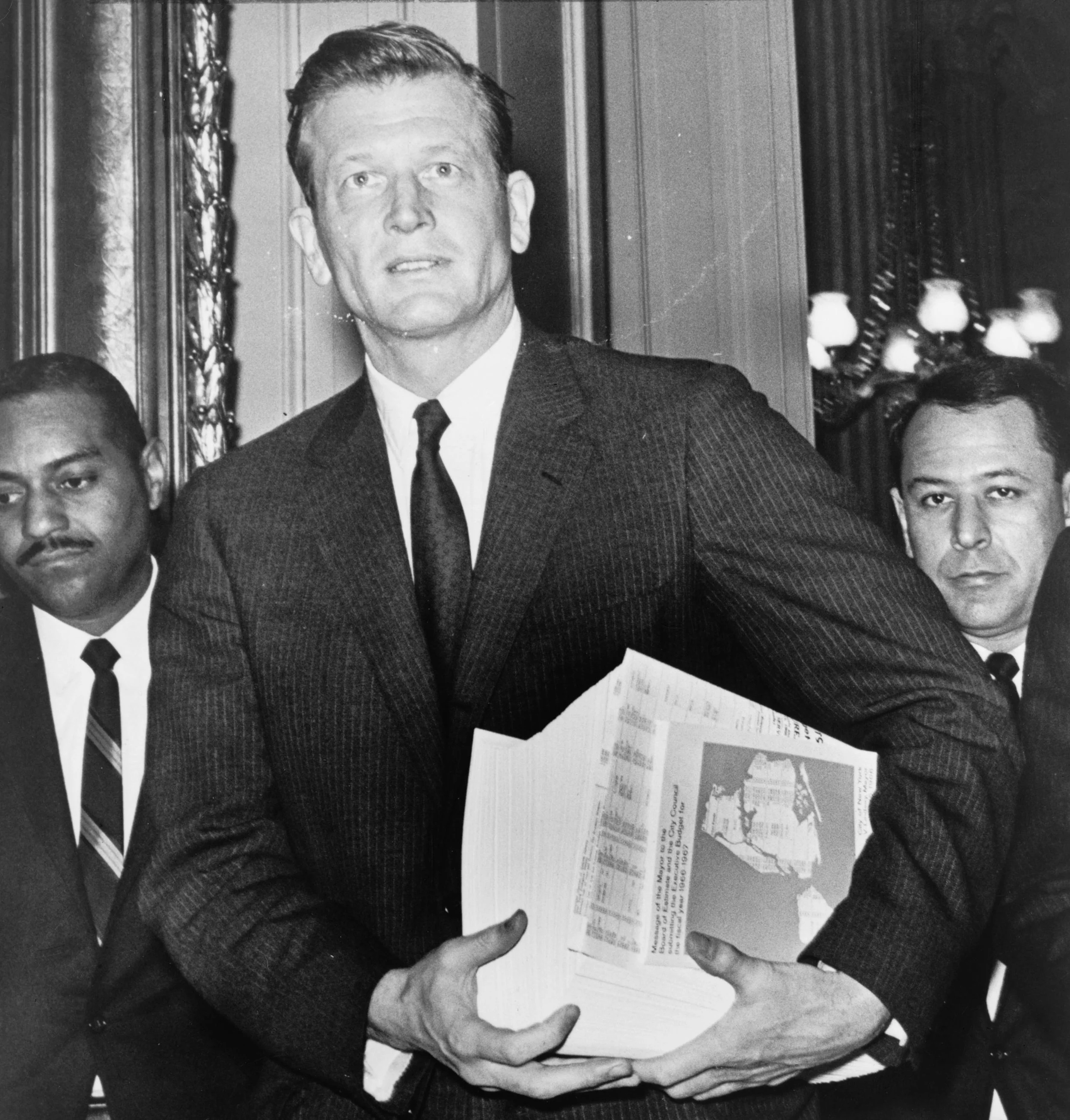
Mayor John V. Lindsay
Around the same time, Burke warned that without a major renovation, the Yankees would have to consider Shea Stadium in Queens or the Meadowlands. Was he bluffing? Partly. The threat gave him leverage, and he used it. But as the city would learn, at least one group of buyers fully intended to take the Yankees to New Jersey.
Whatever the cost
Mayor Lindsay’s answer came in March 1971. The city would spend $24 million to buy Yankee Stadium and the land under it, rebuild the ballpark, and lease it back to the Yankees for 30 years.
The number was not calculated so much as assumed. Twenty-four million dollars was what the city had spent to build Shea Stadium for the Mets a decade earlier, and it looked like a figure City Hall could get approved. It was far too little for a new stadium, so renovation it would be.
The city took the building and the ground by eminent domain, then settled with the owners. Rice University received $2.5 million for its interest in the stadium, a tidy return on a gift from an alumnus.
The decisive vote came in March 1972 from the NYC Board of Estimate, the eight-member panel that controlled New York city’s budget, contracts and land deals. Its members were the mayor, the city comptroller, the City Council president and the five borough presidents. The board agreed to buy and rehabilitate the stadium “whatever the cost.” One of the men who held a seat on that board was the city comptroller, Abraham D. Beame. Remember the name.
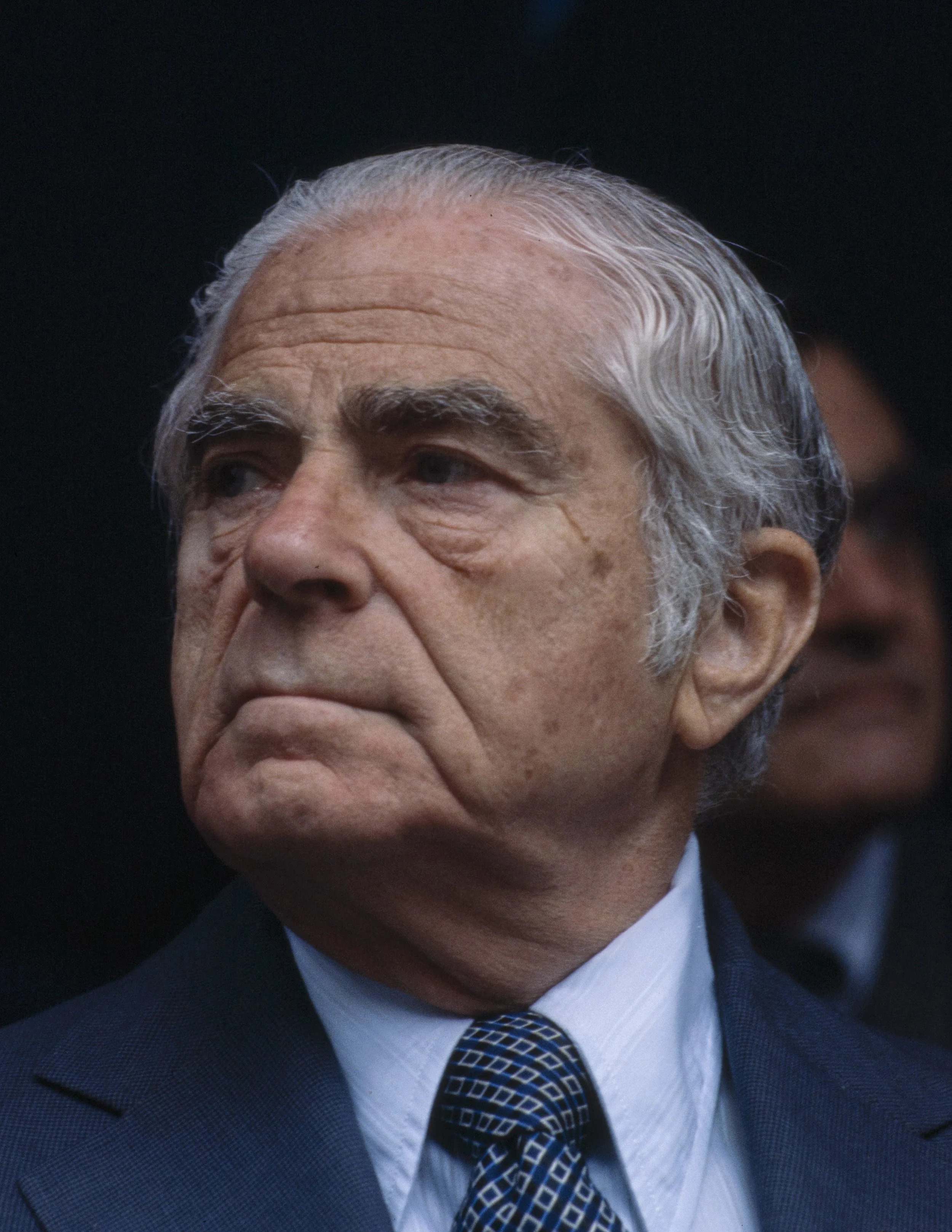
Mayor Abe Beame
That summer the City, through its Department of Parks and Recreation, signed a 30-year lease with the Yankees, who were still owned by CBS. The team would maintain the stadium, and every dollar it spent doing so could be deducted from the rent it owed the city.
Almost no one close to the project believed the $24 million figure. But the promise had been made, and it had no ceiling.
The $168,000 owner
CBS chairman William S. Paley had bought the Yankees for prestige. By 1972 they had become an embarrassment, and that summer he quietly let it be known the team was for sale. He told Burke he could put together a group of buyers himself.
Burke was introduced, through a friend in Cleveland, to George M. Steinbrenner III, a 42-year-old Cleveland shipping executive and former assistant football coach who once owned a pro basketball team.
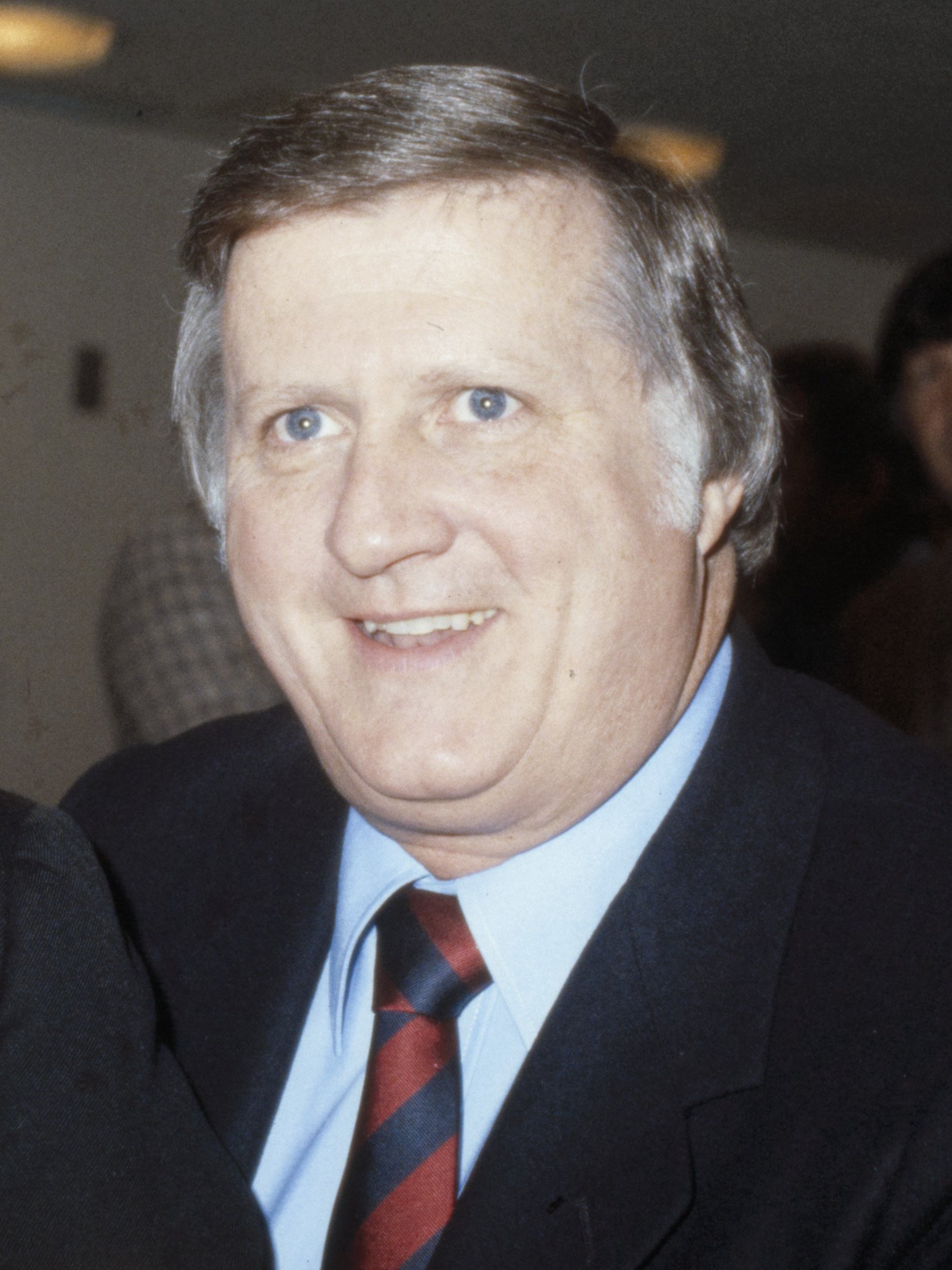
George M. Steinbrenner III
Steinbrenner’s group was not the favorite. According to New York Post columnist Mike Vaccaro’s 2026 book The Bosses of the Bronx, a group backed by the Wall Street firm Lehman Brothers offered between $13.5 million and $14 million. But it was committed to moving the team to New Jersey, and for CBS that was a deal-breaker. Paley did not want to be remembered as the man who let the Yankees leave New York. Steinbrenner promised to stay.
On January 3, 1973, CBS announced the sale to a 12-member group headed by Steinbrenner, with Burke as a minority partner, for $10 million. Other investors included Chicago industrialist Lester Crown, auto executive John DeLorean and Texas oil heir Nelson Bunker Hunt. CBS had paid $13.2 million in 1964. “I think it’s a bargain,” Steinbrenner said.
It was even more of one than the headline price suggested. The deal included two parking garages, which CBS bought back for $1.2 million soon after closing, bringing the net price to $8.8 million. Steinbrenner’s own share was $168,000, a little under 2 percent. His partners’ money did most of the buying.
The largest bargain was something the group didn’t have to buy. Owning a ballpark is usually the costliest part of owning a team. These buyers inherited a 30-year lease and a city promise to renovate the stadium at public expense, with no limit on the bill.
To be fair, CBS’s paper loss was roughly a wash once tax write-offs were counted, and most of what led to the franchise increasing value, came from what Steinbrenner built upon becoming the principal owner. But on the day he bought in, the city had already done the heavy lifting.
In May 1973, after Burke had left the team presidency, Steinbrenner confirmed the deal: the Yankees were staying in the Bronx, and the renovation would go ahead.
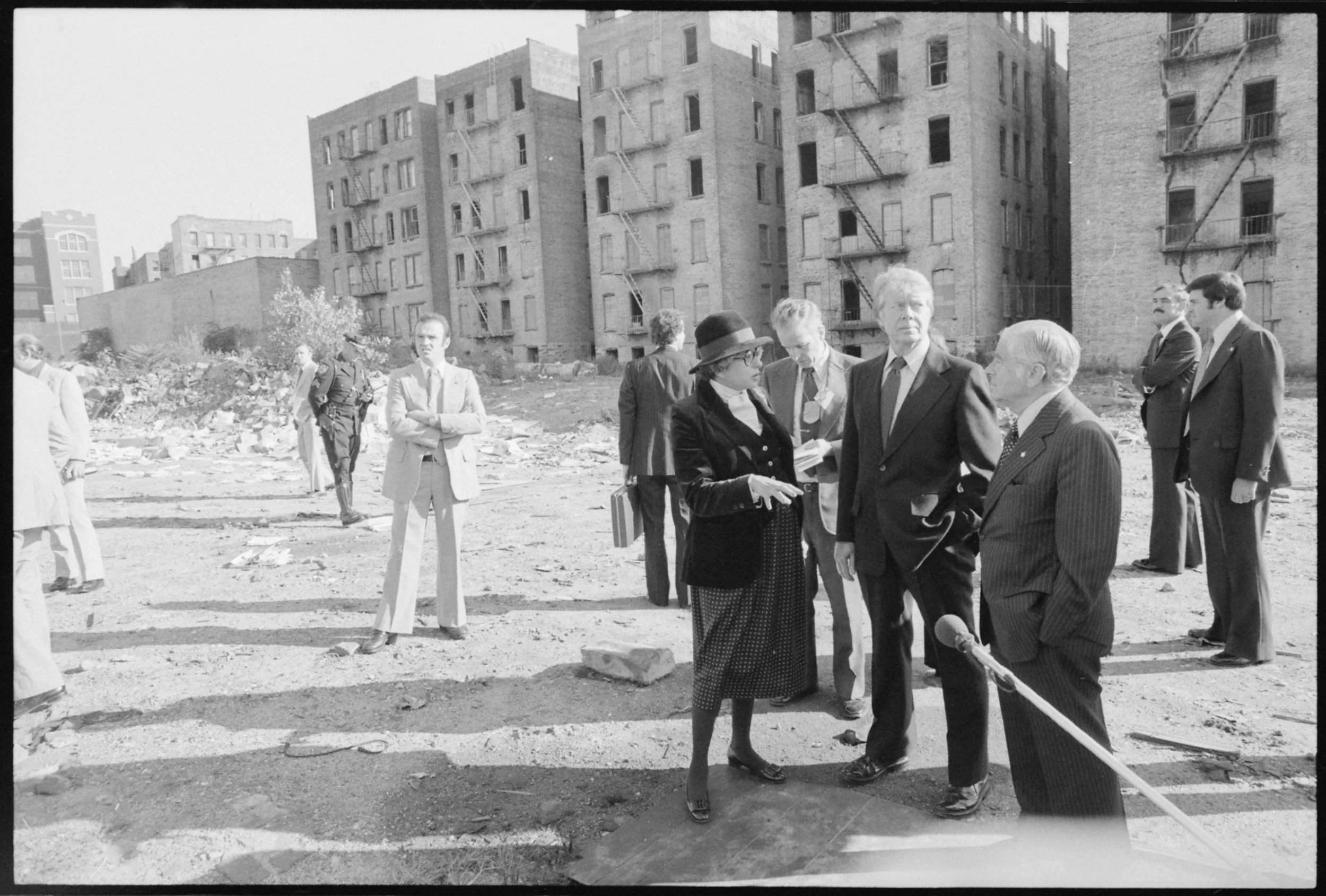
Mayor Beame and President Jimmy Carter in the Bronx across the street from Yankee Stadium
The city ran out of money. The stadium didn’t.
The real price surfaced early, though not in public. In April 1973 Mayor Lindsay conceded the project would need another $7 million. Privately, his budget director was putting the total near $80 million.
For the 1974 and 1975 seasons the Yankees played at Shea Stadium in Queens as tenants of the Mets, a home their own players said felt like the road. Back in the Bronx, crews gutted the old park. They took out more than 100 steel columns that had blocked views, hung a new upper deck, and added escalators, a 565-foot scoreboard and 16 luxury boxes. City officials reported the rising cost a little at a time.
In January 1974 Abraham Beame, the former comptroller, became mayor. Fifteen months later the city ran out of money. Banks refused to lend it more, and by October 1975 New York stood at the edge of default. When President Gerald Ford refused federal help, the Daily News summed up his answer in a headline that became famous: “FORD TO CITY: DROP DEAD.”
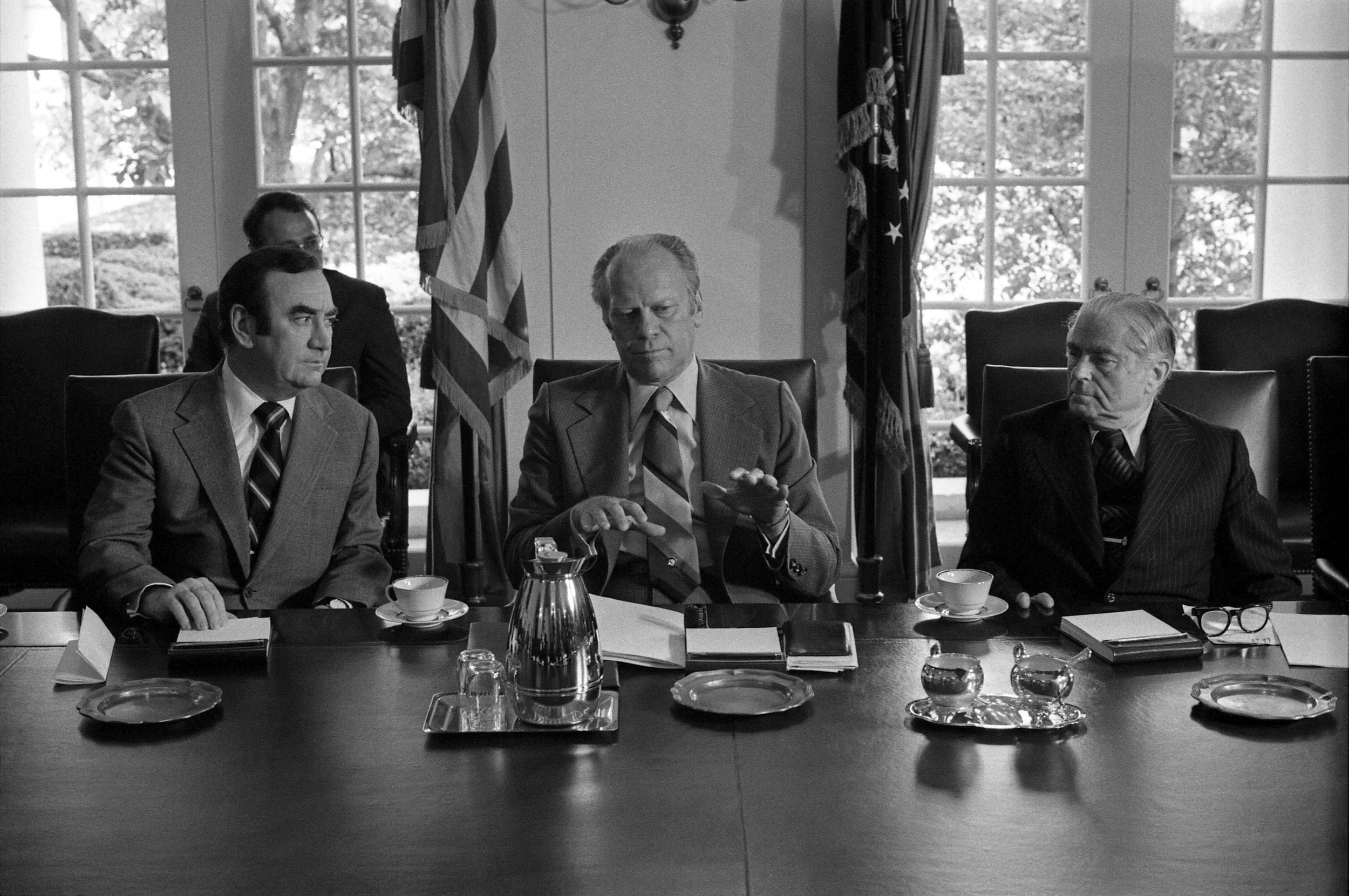
President Gerald Ford discussing financial matters with NYC Mayor Beame
Regardless, the stadium renovation continued. In December 1975, as City Hall cut services across the five boroughs, officials dropped a $2 million plan to improve the neighborhood around the ballpark. Part of that money went instead to finishing touches inside the stadium, including the luxury boxes.
Then, in February 1976, The New York Times reported that the people running the project had known the cost would top $80 million before work even began. They had not told the officials who approved it, or the taxpayers who would pay for it. It was a small window into how City Hall was keeping its books in those years.
By opening day the city’s own estimate stood at more than $100 million, over four times Lindsay’s promise, before the cost of borrowing. Mayor Abe Beame, who had sat on the board that promised to pay whatever it cost, was now the man paying it.
Babe to Abe
On April 15, 1976, the rebuilt Yankee Stadium opened to a sellout crowd of 52,613. Steinbrenner staged a party. Bob Shawkey, who had pitched and won the first game in the stadium in 1923, threw out the first ball. Joe DiMaggio, Mickey Mantle, Yogi Berra and boxer Joe Louis waved to the crowd, and Claire Ruth and Eleanor Gehrig were back. New York Governor Hugh Carey and New Jersey Governor Brendan Byrne attended.
Mayor Beame did not.
Across the street, picketers protested that the city had spent a fortune on the ballpark and nothing on the neighborhood around it. New York magazine put the score in a headline: “YANKEES $100 MILLION; BRONX ZIP.” Time magazine measured the distance from 1923 as “53 years from Babe to Abe.”
The Yankees beat the Minnesota Twins 11–4 that afternoon, won their first pennant in 12 years that fall, and won the World Series in 1977 and 1978. Attendance nearly doubled. The stadium the city paid for became the stage for the team’s revival, and for its owner’s fortune.
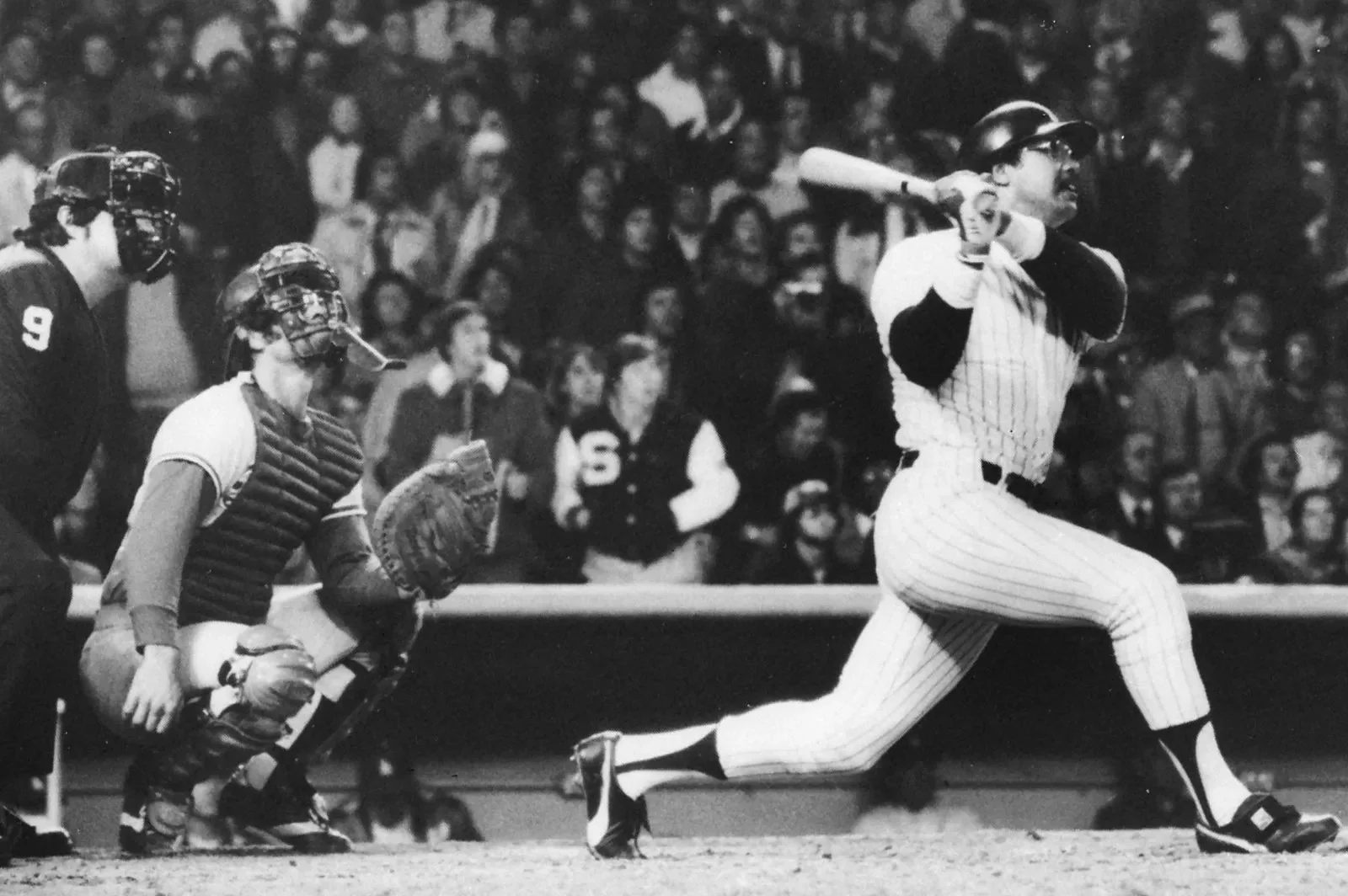
Yankee slugger Reggie Jackson who helped bring the Yankees championships in 1977 and 1978
The 1972 lease had a long tail. Its rent credits for maintenance outlived the renovation by decades; as late as 2008, the City Comptroller’s auditors were still disputing millions of dollars the Yankees had deducted from their rent.
In 2009 the Yankees moved into a new stadium across 161st Street. The arrangement looks familiar. The City owns the land and leases it to a city agency, the New York City Industrial Development Agency, which owns the stadium and leases it to the team. Public ownership keeps the building off the property-tax rolls.
This year, a private equity investment valued the Yankees at close to $10 billion. The Steinbrenner family still controls the team George Steinbrenner bought into with $168,000.
And the ground under the Yankees still belongs to the City of New York, just as it did on that September afternoon in 1973, when fans carried home its seats.
Author’s note. The old stadium is gone, but its field survives. The south side of 161st Street is now part of Macombs Dam Park, and a public baseball field sits on the footprint of the old diamond. In 2020 the city named it for Elston Howard, the coach who wrestled a fan for first base on that last afternoon in 1973. It stands on ground the city bought to keep the Yankees. — Mark D. Schutzman
A question for readers. Were you at the last game in the old stadium in 1973, or did someone in your family carry home a seat? Write to me at mdschutzman@400stories.net.
Sources
Yankee Stadium (New York), Vincent Cannato, SABR BioProject
Yankee Stadium and the Renovation of ‘76, Jim Griffin, SABR
Old Yankee Stadium’s rise and fall, CBS Sports (timeline; Board of Estimate “whatever the cost”)
Fifty Years Ago, a Renovated Yankee Stadium Cost a Broke NYC $100 Million, Frederic J. Frommer (Beame absent; picketers; Time and New York lines)
Book reveals how close Yankees were to moving out of Bronx, Fox News, on Vaccaro’s The Bosses of the Bronx (Lehman bid; “I think it’s a bargain”)
Mike Vaccaro interview, Awful Announcing (Paley’s motive; $168,000)
The Bosses of the Bronx (excerpt), Mike Vaccaro (garages; $8.8 million net)
Rice’s properties, The Rice Thresher ($2.5 million paid to Rice)
Abraham Beame, Wikipedia (comptroller 1970–73)
New York City Board of Estimate, Wikipedia
Yankees valuation after Apollo investment, Bleacher Report, Aug. 2026
To read in the original: John L. Hess, “Memo Indicates City Obscured Stadium’s High Cost,” New York Times, Feb. 3, 1976; Martin Waldron, “Yanks Get Windfall as City Shifts Plans,” New York Times, Dec. 1, 1975